News and Press



Why Do Antidepressants Work for Some but Not Others?
For millions living with depression, the first medication prescribed often doesn’t lead to relief. In fact, studies show that up to 50 percent of patients do not respond to the first antidepressant they try. For others, the side effects are too strong to continue.
This isn’t due to a lack of effort or care. Often, it’s a result of individual biology. Your genes can influence how medications are processed in the body, how long they stay active, and how effectively they target the brain.
At BloomDNA, we help patients and their providers understand these differences through pharmacogenetic (PGx) testing. Our goal is to support safer, more effective treatment paths for individuals living with depression.
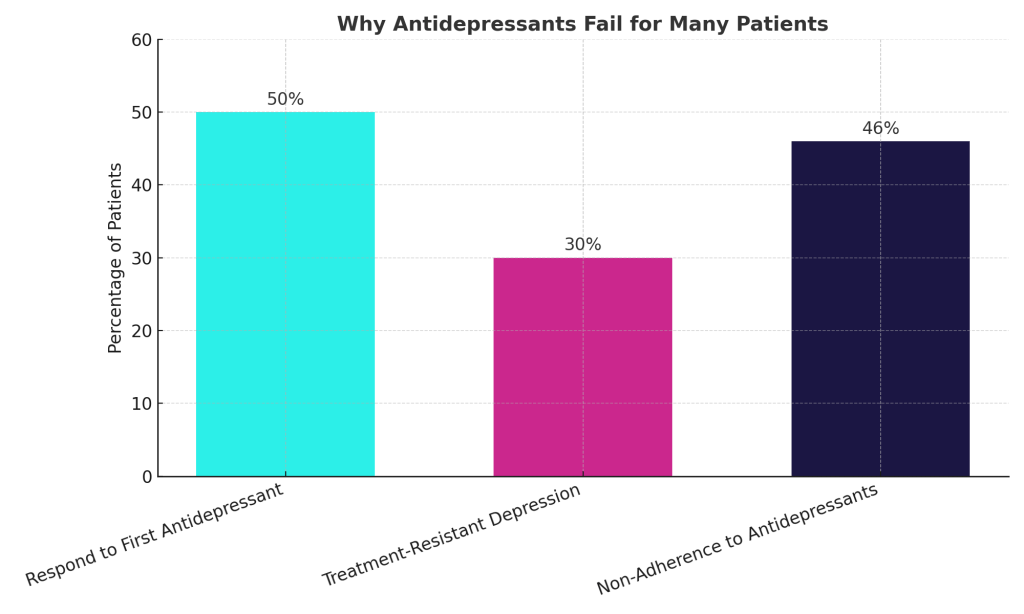
- 50% respond to their first antidepressant
- 30% meet the criteria for treatment-resistant depression
- 46% stop taking antidepressants due to side effects, lack of results, or other barriers
What Is Pharmacogenetics?
Pharmacogenetics is the study of how your genetic makeup influences your response to medications. When it comes to antidepressants, even small differences in metabolism and receptor sensitivity can make a big difference in outcomes.
This is especially important for people who have tried multiple medications or who are sensitive to common side effects like:
- Weight gain
- Sleep disturbances
- Increased anxiety
- Nausea or GI distress
- Sexual dysfunction
Knowing how your body is likely to respond before starting a new medication can reduce trial-and-error prescribing and lead to faster results.
Common Genes That Affect Antidepressant Effectiveness
Several genes are known to influence how antidepressants are processed and how they affect the brain:
- CYP2D6 and CYP2C19: These enzymes help metabolize many common antidepressants. Variants can lead to slow or rapid processing, impacting drug levels in your bloodstream.
- SLC6A4: This gene affects how serotonin is transported in the brain and may influence how SSRIs work.
- HTR2A: Variants here may alter your brain’s sensitivity to serotonin, a key chemical involved in mood regulation.
By understanding these factors, providers can better match medications to a patient’s needs and reduce the risk of treatment-resistant depression.
A Real-Life Impact: Sarah’s Story
Sarah, a 38-year-old professional, had tried three different antidepressants over the span of two years. Each time, she either experienced side effects that disrupted her life or felt no emotional improvement at all.
After a recommendation from her psychiatrist, she took the BloomDNA test. Her report revealed that she was a poor metabolizer of SSRIs and had a variant in SLC6A4 that indicated reduced response to that drug class.
With this information, her provider chose a different type of antidepressant with a more suitable metabolism profile. Within a few weeks, Sarah began to feel steadier and more focused, with fewer side effects.
What BloomDNA Offers
Our test includes:
- Analysis of how your genes affect response to over 300 medications
- Clinical insights into antidepressants, anti-anxiety medications, and mood stabilizers
- A provider-ready report designed for use in primary care or psychiatry
- A one-time test that offers long-term value
Whether you are just starting treatment or have experienced years of medication changes, BloomDNA can support a more confident approach to your care.
When Relief Takes Too Long, Look to Your DNA
Medication failure can feel deeply personal. But more often than not, it’s not about effort or mindset. It’s about biology. Pharmacogenetic testing gives your care team the data they need to make better, more informed treatment decisions.
Ask your provider how BloomDNA can help identify the right depression treatment faster.
References
PMC
https://www.ncbi.nlm.nih.gov/articles/PMC10503923/
“Treatment‐resistant depression: definition, prevalence, detection …” – estimated at least 30% of persons with depression meet the definition of treatment‑resistant (inadequate response to two or more antidepressants).
PMC
https://www.ncbi.nlm.nih.gov/articles/PMC6662579/
“Response rate profiles for major depressive disorder: Characterizing early response and longitudinal nonresponse” – discusses genetic associations with early remission and nonresponse in depressed patients.
Nature
Influence of CYP2C19 Metabolizer Status on Escitalopram Response in Anxiety/Depression
https://www.nature.com/articles/s41398-021-01488-3
“Optimizing prediction of response to antidepressant medications …” – notes that current practice for major depressive disorder sees ~42‑53% response rates for antidepressants.
PMC
https://www.ncbi.nlm.nih.gov/articles/PMC9782667/
“Non‑Adherence to Antidepressant Treatment and Related Factors in …” – shows non‑adherence rates around 46% in one study, which affects outcomes.
VA Research
https://www.research.va.gov/currents/0722-Genetic-testing-may-benefit-patients-with-depression.cfm
“Genetic testing may benefit patients with depression” – describes how PGx testing helps providers avoid prescribing antidepressants with undesirable outcomes.