News and Press



Understanding Gene-Linked Anxiety Treatment Resistance
Getting It Right the First Time
Anxiety affects more than 40 million adults in the United States, and for many, medication becomes a critical part of treatment. But finding the right prescription often means trial and error. Some medications bring no relief. Others cause side effects that feel worse than the anxiety itself.
That cycle can take weeks, months, or even years to resolve. But now, pharmacogenetic (PGx) testing is giving patients and providers a head start by identifying how the body is likely to respond to specific anxiety medications.
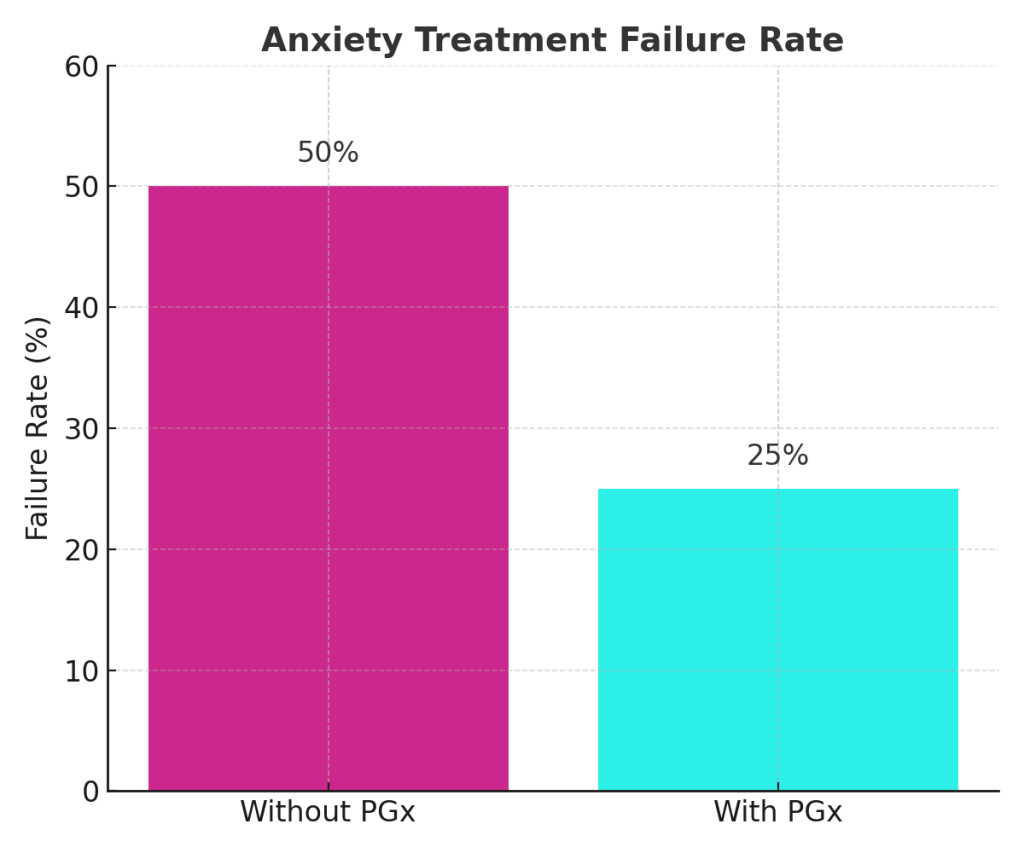
Source: Frontiers in Pharmacology, NIMH
At BloomDNA, we specialize in this testing to help eliminate the guesswork. For people like Taylor, it’s been a breakthrough.
Taylor’s Story: From Frustration to Relief
Taylor, a 32-year-old professional, had been managing anxiety since college. Over the years, she tried five different medications. One caused severe fatigue. Another made her feel emotionally numb. Two didn’t seem to work at all. Each new prescription came with a waiting period and growing frustration.
Her provider recommended BloomDNA pharmacogenetic testing before trying a sixth medication. The results showed that Taylor had a genetic variant in CYP2C19, which affected how her body processed SSRIs. The medication she had been prescribed most often was likely being metabolized too quickly to take full effect.
Armed with this insight, her provider selected a different medication and adjusted the dose. Within a few weeks, Taylor noticed a marked improvement. Her anxiety became more manageable, and the side effects were minimal.
Why Pharmacogenetic Testing Works
Pharmacogenetic testing looks at your genetic blueprint to understand how your body metabolizes medications. For anxiety, this means evaluating the pathways and enzymes that process SSRIs, SNRIs, and other anti-anxiety treatments.
At BloomDNA®, we test markers such as:
- CYP2C19 – Influences metabolism of medications like escitalopram and citalopram
- CYP2D6 – Affects how sertraline and certain SNRIs are processed
- SLC6A4 – Related to serotonin transporter function, which can shape how effectively SSRIs work
By identifying how these genes function in your system, your provider can make better decisions about which medications to try, what doses to use, and what to avoid.
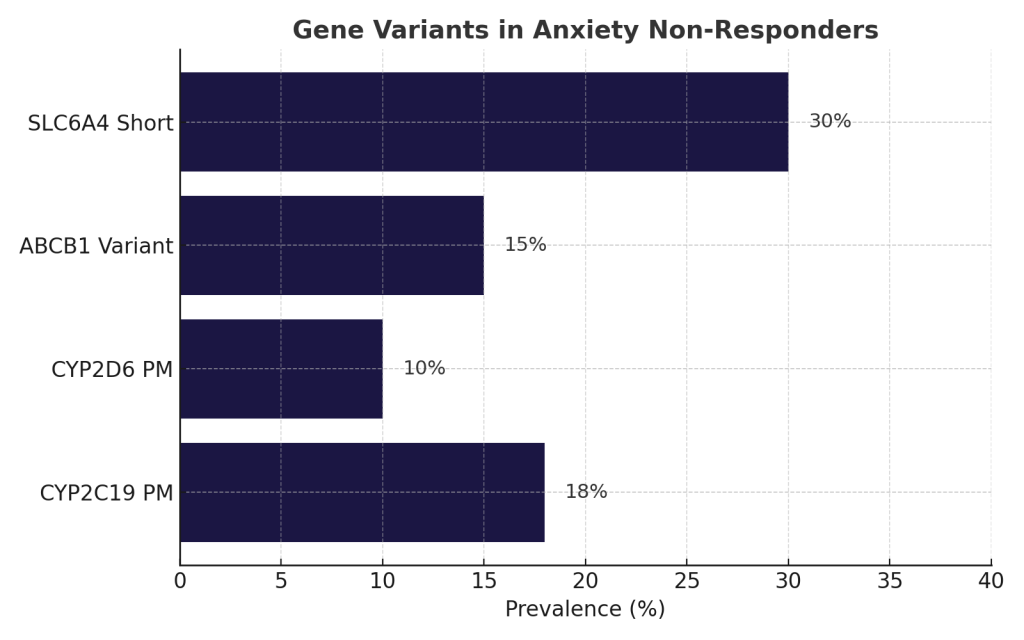
PMC11814644, ScienceDirect
Saving Time and Reducing Harm
The traditional approach to anxiety medication often relies on educated trial and error. A doctor starts with a commonly prescribed option, adjusts if it doesn’t help, and tries again. That process can lead to unnecessary suffering and lost time.
With BloomDNA®, that cycle can be shortened. Our test delivers a clear report with:
- Medication guidance based on your genetic profile
- Flags for drugs that may be poorly metabolized or cause more side effects
- A tool your provider can use to plan a treatment strategy with fewer delays
This approach does not replace clinical care. It strengthens it with personalized science.
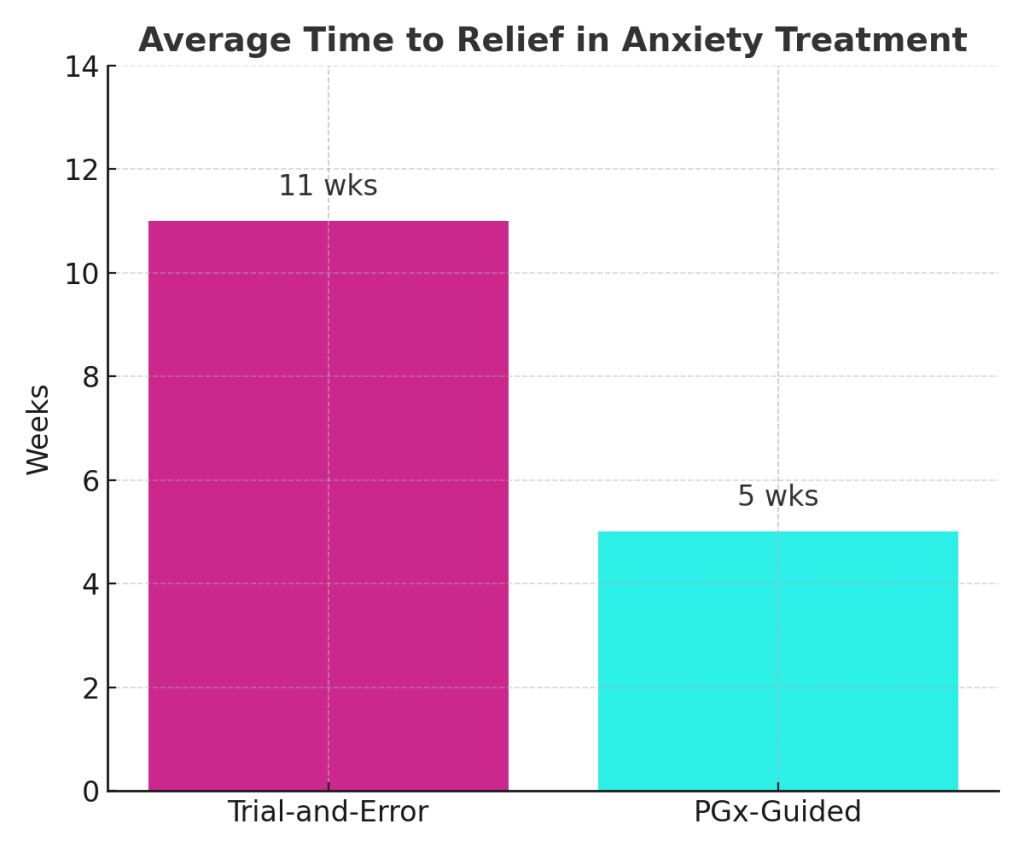
Source: Clinical Practice in Mental Health, Meta-analysis (various)
Trial-and-error prescribing leads to prolonged suffering. PGx-guided prescribing can reduce that time significantly.
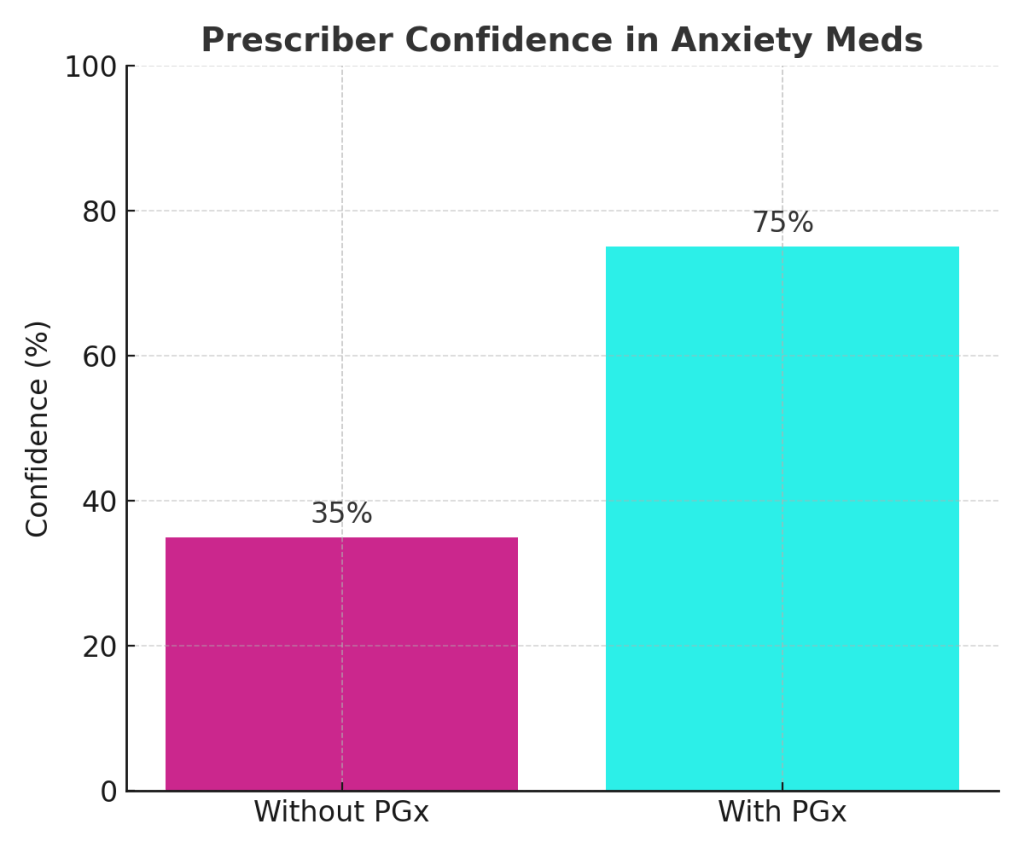
Providers report significantly higher confidence when PGx test results are available.
Source: Frontiers in Pharmacology 2024
What You Receive With BloomDNA
Our test is:
- Processed in a U.S.-based certified lab
- Reviewed for accuracy by clinical experts
- Designed to assess over 300 medications
- Structured to support both patient clarity and provider decision-making
Start With Your DNA, Not With Guesswork
Whether you are starting treatment for the first time or revisiting options after failed attempts, pharmacogenetic testing can offer insight that moves you forward.
Anxiety treatment should be built around you. BloomDNA® helps providers match the right medications to the right person based on the way your body works. No more starting from scratch. No more unnecessary side effects. Just clearer direction.
Learn how BloomDNA can guide anxiety treatment.
References
Pharmacogenetic Testing in Treatment‑resistant Panic Disorder: a Preliminary Analysis
https://www.ncbi.nlm.nih.gov/pmc/articles/PMC11814644/ CPEMH
A review summarizing pharmacogenetic findings related to treatment response in anxiety disorders.
Pharmacogenetics of Anxiety and Obsessive Compulsive Disorders
https://www.sciencedirect.com/science/article/pii/S0924977X23001608 ScienceDirect
Review of gene‑medication interactions specifically in anxiety disorders, supporting the blog’s theme of genetic factors influencing treatment.
Pharmacogenetic Testing for Poor Response to Antidepressants: A Transnosographic Case Series
https://www.frontiersin.org/journals/pharmacology/articles/10.3389/fphar.2024.1440523/full Frontiers
Though focused on depression, it includes anxiety in its cohort and emphasizes how non‑normal metabolizer phenotypes (CYP2D6, CYP2C19) contribute to lack of response — applicable to anxiety treatment resistance.
The Role of Pharmacogenetics in Personalizing the Antidepressant and Anxiolytic Treatment
https://www.ncbi.nlm.nih.gov/pmc/articles/PMC10218654/%20pmc.ncbi.nlm.nih.gov
Broad overview of pharmacogenetics in anxiety and mood disorders; supports general statements about gene‑medication interaction and personalization of treatment.